


NMC Scientist Grant Snitker Receives NSF Grant to Study Long-Term Fire Management
NMC Scientist Grant Snitker Receives NSF Grant to Study Long-Term Fire Management
 New Mexico Consortium scientist Grant Snitker recently was awarded a National Science Foundation grant for a project titled, “Long-Term Human Fire Management and Environmental Change in High-Elevation Social-Ecological Systems.”
Dr. Snitker is lead PI along with co-PIs Dr. Sean Bergin of Arizona State University, Dr. Megan Walsh, a professor at Central Washington University, and Dr. Michelle Steen-Adams, a professor at Washington State University.
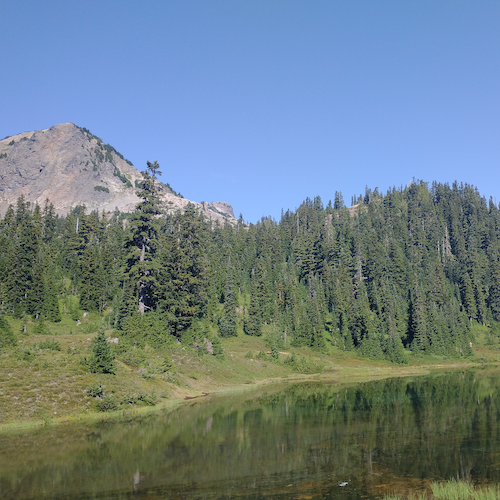
In this project, Dr. Snitker and colleagues investigate the social-ecological relationships within Pacific Northwest high-elevation ecological zones, emphasizing long-term cultural burning practices.
Their main objectives are to conduct archaeological surveys of subalpine ecosystems; interpret processes of high-elevation subsistence during the early Holocene and subsequent changes in burning practices; and investigate how subsistence land management influenced historical fire regimes and long-term ecosystem stability/change.
This study employs an interdisciplinary approach that interweaves archaeology, paleoecology, and computational modeling to evaluate how human-environment interactions shape high-elevation landscapes. The research team will establish partnerships with federal land management agencies and indigenous partners to collaboratively interpret research findings.
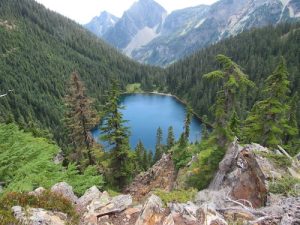 Throughout history, fire has been utilized as a tool to manage ecosystems. However, there is a lack of understanding regarding the impact of historical burning practices on high-elevation ecosystems. This project evaluates the spatial distribution and chronology of high elevation land-use, documents long-term trends in climate and human influence on fire and vegetation, and records material evidence for cultural burning practices to rejuvenate or maintain important plant species. They will develop a novel paleo-fire reconstruction and introduce new methods of soil charcoal analysis to make more substantial connections between past human land-use, cultural fire, and vegetation change. The datasets generated by this project will be analyzed using a computational virtual laboratory to explore the interactions between climate and cultural burning. This approach allows the team to uncover dynamics that may not be readily apparent when examining only archaeological and fire history data.
The findings of this project will contribute to a deeper comprehension of social-environmental dynamics and stability in high-elevation ecosystems. This knowledge will be instrumental in developing collaborative management approaches, preserving cultural ecosystem services, mitigating the risk of severe wildfires, and safeguarding against ecosystem degradation in these distinctive landscapes.
This project is funded by the National Science Foundation.